The following information will help to make your hunt more successful and keep your energy up and your attention focused on the hunt while keeping the pack from becoming a kitchen. Test each food item for cold weather use by reaching for it with cold hands, recognize the early signs of deterioration and be able to bring all unused food home in good condition.
Plan around access, not just calories
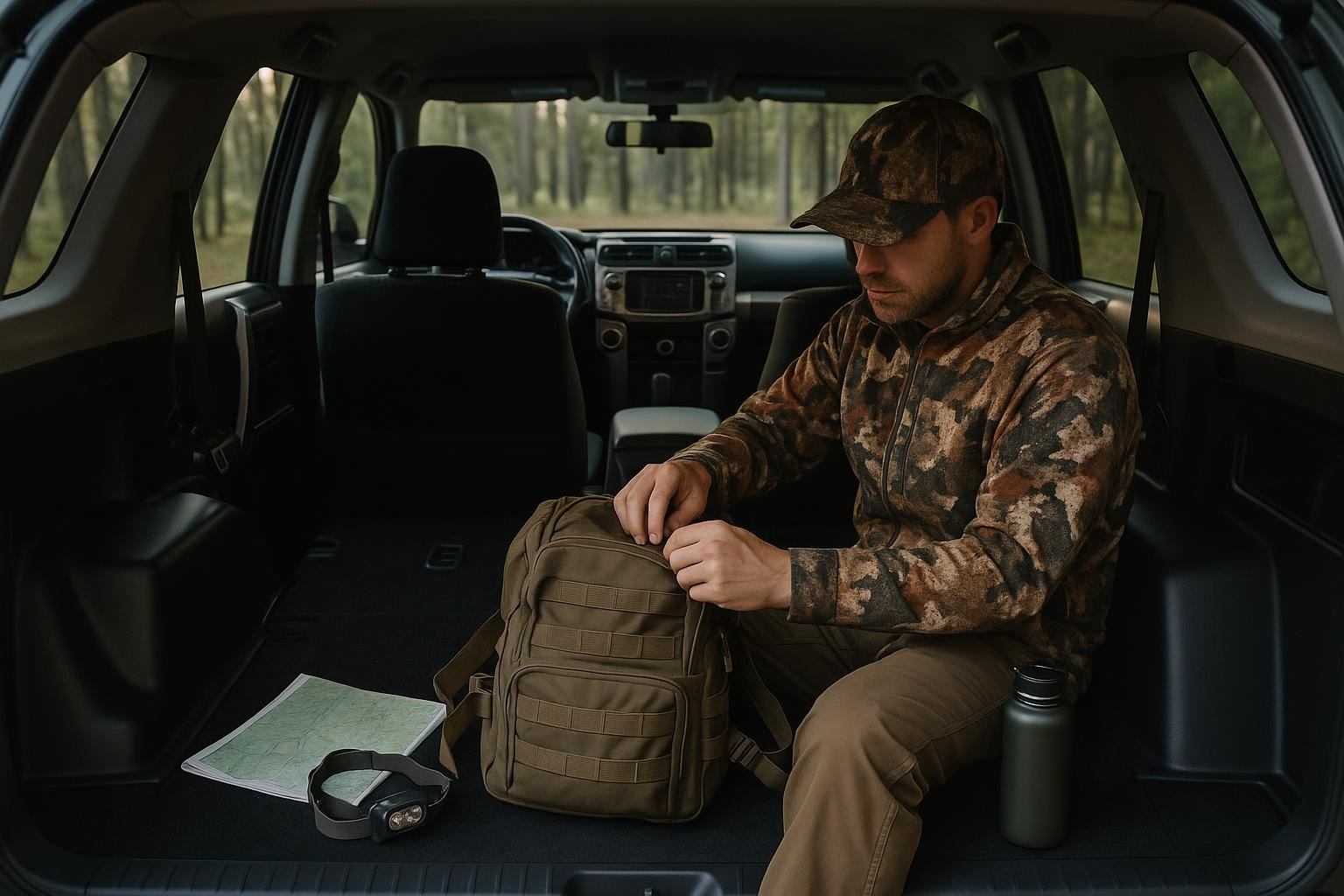
All meals should be at the top of your pack and easily accessed throughout the day. Since you will probably be packing your pack the night before, the food that you need for the next day should be in the outside pocket of your pack, the top compartment, or in a small pouch that can be opened up without having to unload the rest of your pack.
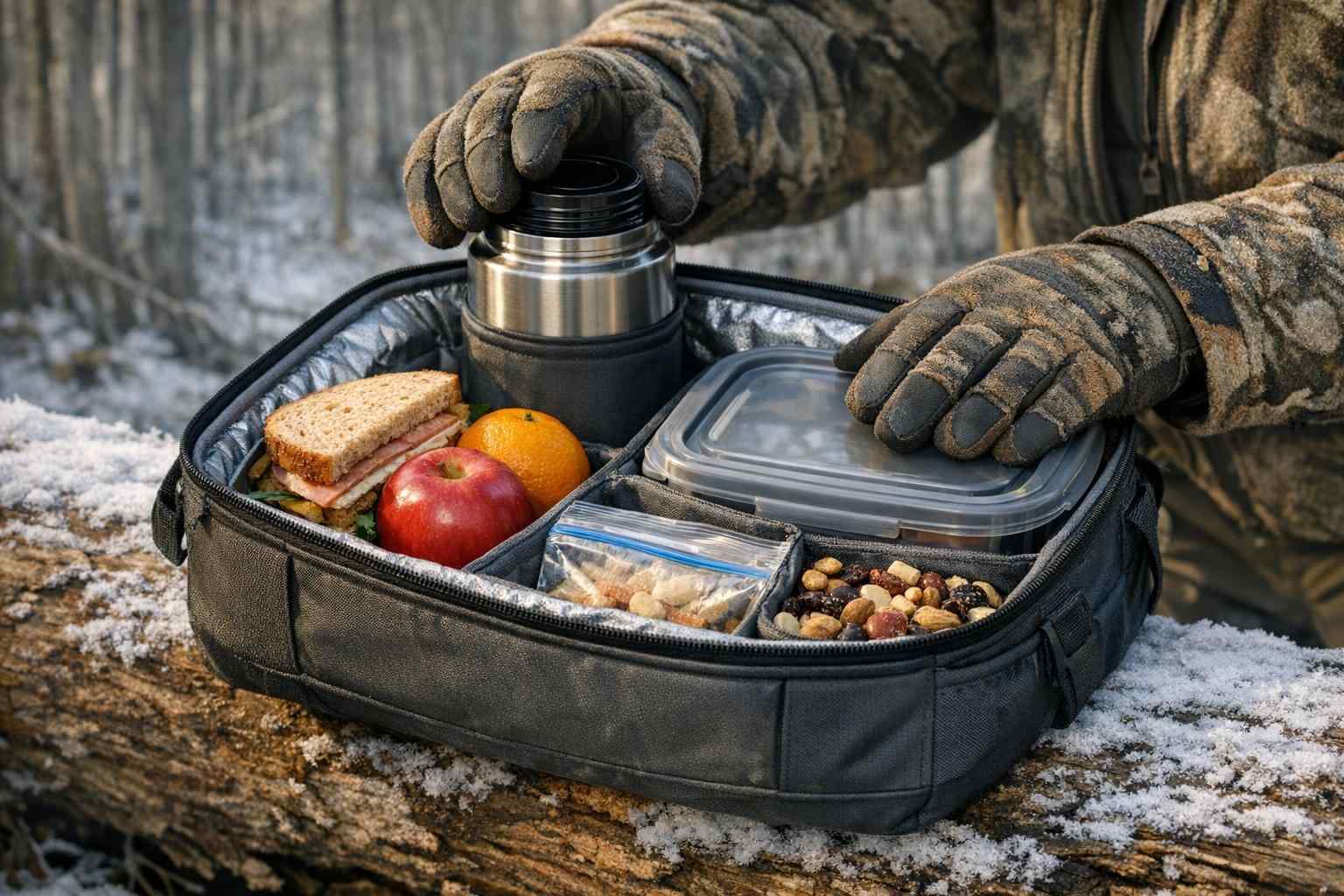
Ready-to-eat items must be kept separate from potential leakers such as drinks. Soft items such as apples, pears or sandwiches are best stored in a soft container, such as a oatmeal can, inside a second bag to prevent damage and to keep wrappers from becoming litter. Food should be packed in the amount that will be consumed during a particular pause in your day, not in a large container to be opened, handled and then resealed repeatedly.
Just as important as selecting good hunting foods for cold weather is testing how easily you can open and identify your packed foods when you are wearing gloves. If you cannot do these simple tests with your foods before you leave for your trip then you had better re-pack before you leave.
Choose food that still works when cold
Most snack foods deteriorate in cold weather. In addition to becoming less palatable, they can also become harder to bite into. This is true for bars as well as for sandwiches. Even relatively good waterproof wrappers can become brittle and 'freeze' to their contents. So the best cold weather hunting foods are those that can still be eaten cold but are also good in small portions. These would include items such as sandwiches, firm fruits, trail mixes, dry crackers, and even some of the new shelf stable packets of food that are designed to be consumed cold.
While a hot meal can be a good way to fuel yourself for hunting, a warm repast must be prepared in a safe and legal manner. Further, all sorts of variables (time, weather, fuel, your gloves, etc.) can conspire against you. Hearty, warm meals must be planned with a means to immediately consume a cold (back-up) alternative should things not go as planned.
Look for signs of hunger and weakness in yourself. You may become irritable, have decreased focus, start to shake, feel weak, or even get a headache. These are signs that you need to take a break to warm up and to reassess your situation. Severe symptoms or ones that get worse are reasons to seek assistance. If you start to feel confused or are abnormally drowsy seek assistance and check the current cold weather safety guidelines.
Make hydration easy to reach
Do not depend on being able to drink when you stop for the day. Cold weather affects our sense of thirst. Make provision for being able to drink frequently throughout the day. This is easiest if the bottle or container is in the outermost part of your pack and you can open it while you are sitting with your gloved hands.
Note the state of your drink before you head out. A partially frozen drink may not open, and a drink with a very small opening may freeze solid in cold weather, becoming impossible to open. While using an insulated drink is recommended, do not rely on the insulation to check your drink before you head out.
Confusion, faintness or inability to stay alert while cold-exposed can quickly turn into life threatening situations. Seek help immediately and refer to current official cold weather safety guidance and public health information.
Build a meal plan with a fallback
Plan for a little more time to eat by writing down what you think you will have for your meal(s) and also writing down a simple alternative in case things don't work out as planned. Think in terms of needing to eat more in case of a longer sit, an unexpected delay, needing to walk even further than planned or needing to walk back to your vehicle. Choose items that can be easily eaten cold whilst still managing to move.
When choosing a meal to bring on a hunt it is best to stick with familiar foods and avoid introducing too many new unknowns. Foods that are very rich, oily or heavily seasoned can have very different effects on people's bellies. Unless you have previously tried the food out on practice hunts and had no problems, it is best to steer clear of such potential problems when out in the remote wilderness.
Inevitably some things will not get eaten. Please record what does not get eaten and it can help with future food planning. See if some items were difficult to get at, or even became too dry. Items that need to be kept cool should also be considered. Hopefully some items will remain that are as acceptable to pack for future use as the items you took.
Inspect food before you eat it
A frozen item will not have deteriorated in terms of nutritional value but it will change in texture and may even leak. Check for any sign of deterioration before eating, i.e. check the container, seal, smell, and appearance of the item. If in doubt, throw it away – do not taste it to see if it is ok.
Raw ingredients, ready to eat foods, and soiled utensils should all be kept separate from each other and from clean packaged foods that may be contaminated by leaking food. A leak in a pack may spread through a pocket quickly contaminating other foods, gloves, maps and other gear.
In regards to temperature control for meals that you will be consuming later in the day follow current food-safety guidance for storage and for transport. There are changes to food-safety requirements and recommendations and therefore follow current official public-health guidance where food-safety is unclear.
Bring leftovers home without a mess
As you pack meal leftovers, put them in a container or durable bag to carry home. Package open foods, waste foods and their packaging, and other soiled items separately from your clean food for the return. Be sure to mark the container so that it is obvious that it contains leftovers and not additional food for the trip.
There is no excuse for leaving behind food scraps, peelings, etc. whether at a stand, on a trail or in a vehicle. The leftovers from your meals can attract wildlife and create a mess, even become a nuisance. Check all pockets when leaving a stand or trail for scraps left from a quick snack, etc.
Back at home you need to inspect any food returned and follow the safe handling of perishable foods. Old or leaking food must be thrown away. Also make sure to clean and dry all re-usable containers to be ready for your next outing.
A sound field-food system is not complicated. The main principle is to enable you to have food for essential energy all the time. You must be able to recognize symptoms of hunger etc. The main thing is to prevent contamination and to return leftovers safely to your store. These simple measures will help you to be able to concentrate on your event and to avoid problems which could occur when you are having a very long day.