
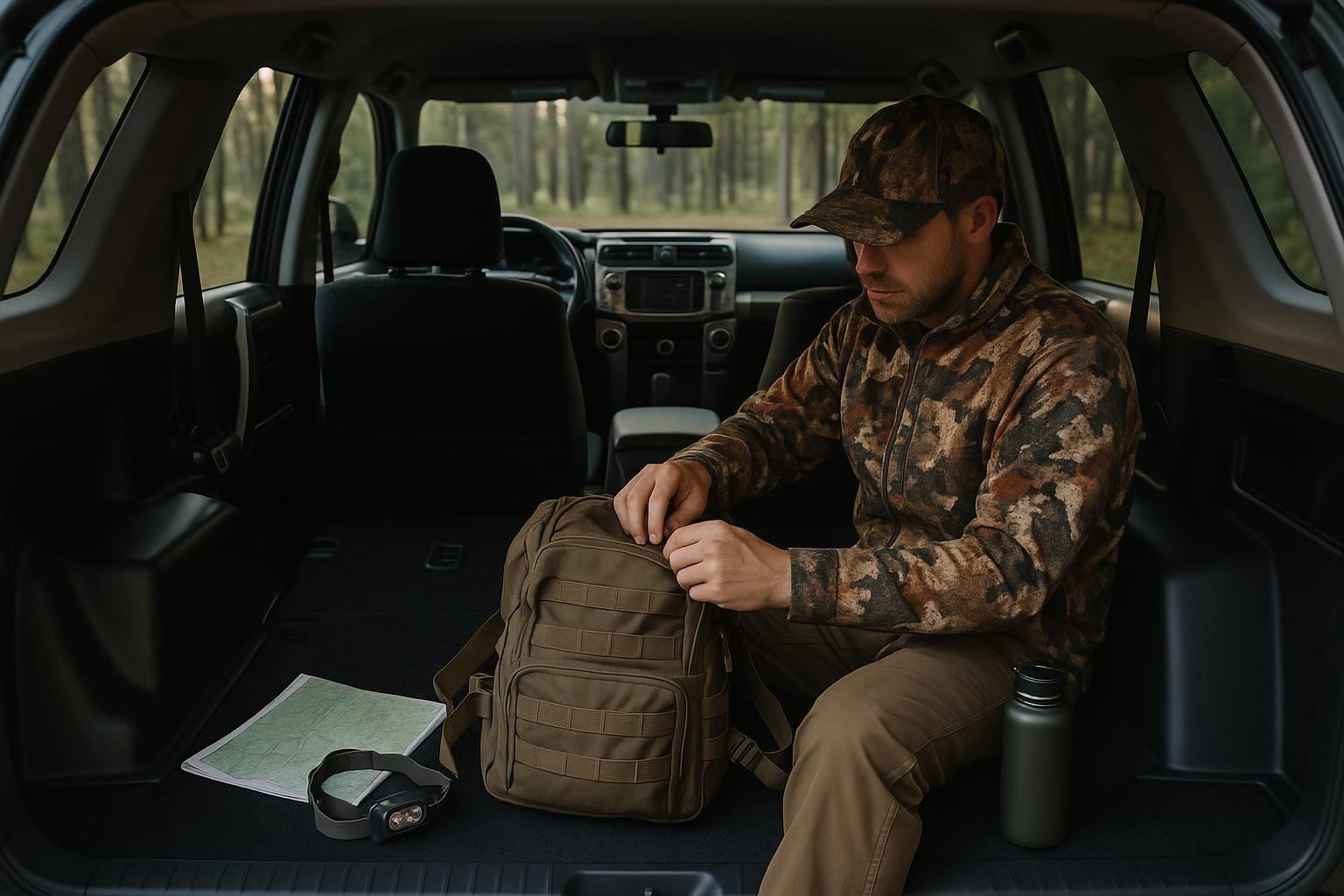
The night before a Saturday public-land hunt you can rush through a packing routine or spend another half-hour verifying details that could end the day before it starts. The second option is rarely dramatic. It can prevent a missing permit, dead headlamp, poor clothing choice or uncertain shot decision. Good preparation is less about carrying more and more about removing questions. A simple pre-season routine also gives ethics, conservation and changing regulations a place in the plan.
Start with the rules, not the gear bin
Begin with the regulations for the exact place, season and species you intend to pursue. Requirements may differ between jurisdictions, public and private ground, weapon types, reporting systems and special-access areas. Check license and tag requirements, legal hunting hours, approved methods, land-access conditions, blaze or safety-clothing rules, transportation requirements and harvest-reporting instructions.
Do not rely on a screenshot from season or advice remembered from a friend. Regulations can. Online summaries may omit local restrictions. Use guidance from the responsible wildlife agency or land manager and keep a digital or printed reference available when service may be unreliable.
Resolve uncertainty before the season opens. If a boundary tag detail or reporting rule is unclear ask the agency. A few minutes of verification is cheaper than a violation and supports confident decisions in the field.
Turn one route into a useful rehearsal
For the Saturday scenario the route is familiar: park at a gravel pull-off walk the old logging road and settle near a transition between cover and open ground. Familiarity can hide problems so use a pre-season visit as a rehearsal rather than a casual stroll.
Walk the access route in daylight. Note locked gates washed-out sections, new signs, unstable stream crossings and places where a vehicle could block emergency access. Confirm that your entry point is still allowed. Observe how quietly you can move, but do not treat scouting as permission to enter land that is closed or posted.
Mark a route and a sensible alternative, perhaps a safer place to leave if weather changes or another user occupies the area. Share your destination. Expected return with someone who is not on the trip. A check-in plan is useful for a routine outing.
Test equipment under conditions
Gear failures rarely announce themselves at home. Batteries work loose rain shells leak around seams boot soles separate and a comfortable pack becomes painful after a longer walk. Test equipment in conditions resembling the planned outing then. Replace what solves a real problem.
Use this checklist during the week before opening day:
– Confirm licenses, tags, identification and required safety equipment.
– Check footwear, clothing layers, rain protection and spare socks.
– Test headlamps, navigation tools, phone charging and backup batteries.
– Inspect optics, slings, fasteners, knives and pack stitching for damage.
– Pack water, food, first-aid supplies and needed medication.
– Verify that harvested game can be tagged, transported and reported as required.
– Remove items that add weight without serving the plan.
For a firearm or bow follow the manufacturers safety guidance. Use an appropriate legal practice setting. The issue is not whether equipment is expensive. Whether you can operate it safely quietly and consistently without improvising. Do not make modifications for convenience.
Set ethical limits before the pressure arrives
hunting becomes harder when a long walk, fading light or sudden opportunity narrows your attention. Decide in advance what will make you pass: an uncertain target, obstructed view, excessive distance, poor footing, a rushed angle or any situation in which the animals identity is not beyond doubt.
Include recovery in those limits. Consider terrain, weather, available daylight and your ability to reach the location without risk. A legal opportunity is not automatically an one. If you cannot make a shot or form a reasonable recovery plan waiting is the better decision.
After a harvest follow tagging and reporting requirements promptly handle the animal respectfully. Avoid taking more than you can use or lawfully retain. Ethical hunting is reflected in choices made when success is uncertain not in the outcome.
Let habitat observations improve your plan
Preparation is also a chance to read the landscape. Look for erosion near trails, damaged gates, invasive plants, litter, blocked drainage or signs that people are concentrating pressure in one sensitive area. Do not disturb habitat to create a convenient setup and stay within the propertys permissions and restrictions.
Use established access where practical keep vehicles out of vulnerable ground pack out line and food waste and avoid unnecessary disturbance around water, nesting areas or closed zones. If you find a hazard or management concern, document its location and report it to the appropriate land manager rather than trying to fix it alone.
Conservation is part of preparation. Knowing where you may go what the habitat can. How your presence affects other users makes the outing more sustainable and often more enjoyable.
Make the decision the night before
By Friday evening the goal is not a perfectly optimized pack but a clear plan with no major unanswered questions. Check the forecast, access status and regulations once more then decide whether conditions support your route, equipment and ethical limits.
If they do not adapt the plan. Stay home. Delaying one outing is preferable to forcing a decision because opening day has arrived. A deliberate routine turns preparation from a last-minute scramble into participation, in the outdoors.
The result may be charged batteries, a verified tag, dry socks, a shared itinerary and a willingness to pass when conditions are wrong. These habits rarely make a story but they make the day safer, calmer and more respectful of wildlife, landowners, fellow visitors and the future of the resource.